Infrastructure Over Point Solutions
Infrastructure-first automation is becoming the foundation for scalable, AI-driven laboratories.

Lab automation has delivered meaningful gains over the past decade, with many laboratories automating individual workflows to reduce manual effort, increase throughput, and improve consistency.
However, most of these gains have been achieved through point solutions:
- A liquid handling system optimised for one assay.
- A workcell configured around a specific protocol.
- A scheduling layer built for a defined execution path.
With each solution designed around a specific workflow or application, in isolation, they deliver value to solve the immediate problem. However, future expansion is often a secondary consideration - rather than a core design principle - and over time, limitations of this approach are emerging.
The Limits of Point Solutions
New projects require new systems, additional instruments introduce integration challenges, and data becomes fragmented as execution logic is duplicated or rewritten. What began as efficient solutions ends as a collection of disconnected automation islands.
Complexity accumulates with every deployment. Dependencies become harder to manage, and vendor-specific implementations limit standardisation and scalability across teams and sites. As systems expand, coordination slows, integrations become harder to maintain, and data becomes increasingly difficult to unify.
Over time, what once accelerated progress starts to hinder it. This is the fundamental limitation of point-solution automation: these systems do not fail - they simply are not designed to support what comes next.
Lab Infrastructure is the Foundation of Autonomy
The future of automated science will not be built on isolated workflows, but on infrastructure that can support change over time.
In a laboratory context, infrastructure is not simply a collection of instruments. It is the architecture that connects, coordinates, and governs how systems work together over time to define how laboratories scale, interoperate, and introduce new capabilities without disruption.
Infrastructure enables capabilities to be reused, extended, and adapted as scientific priorities evolve. New workflows can be introduced without rebuilding from first principles, while existing systems can be reconfigured rather than replaced to reduce both capital investment and operational overhead.
At its core, infrastructure-first automation separates orchestration from execution. A centralised software layer coordinates workflows, while modular hardware carries out physical tasks. Instruments become flexible resources that can be allocated and reconfigured as needs change.
This enables scale.
Workflows can span instruments, programmes, and sites without bespoke integration. Data is captured consistently at the orchestration layer, supporting integration with analytics, LIMS, ELNs, and AI systems while maintaining performance as organisations grow. Infrastructure also supports governance; version control, access management, and traceability are embedded to ensure that changes remain controlled, auditable, and compliant.
At Automata, this approach is reflected in the design of the LINQ platform, combining modular hardware with software-defined orchestration and enterprise-ready deployment models. LINQ separates workflow orchestration from physical execution, allowing laboratories to add instruments, reconfigure processes, and introduce new workflows without redesigning the underlying system, and integrate automation into existing environments while retaining the flexibility to evolve.
The goal is not a single automated workflow, but a reusable automation foundation that scales across workflows, adapts to changing scientific priorities, and enables autonomous laboratory operations.
Designing an Autonomous-Ready Architecture
Automation is no longer limited to executing predefined workflows. Laboratories are moving toward systems that adapt in real time, where experimental parameters, scheduling decisions, and workflows evolve based on incoming data in a shift that underpins autonomous operation.
Traditional automation assumes stability: workflows are defined, validated, and executed repeatedly, with change managed carefully and infrequently. Autonomous systems operate differently, relying on continuous feedback, data-informed decisions, and execution paths that are not fixed in advance. In closed-loop experimentation, the workflow itself becomes dynamic, shaped by the outcomes it produces and responding to change as it happens.
Static, application-specific systems struggle in this environment. When orchestration is tightly coupled to hardware or embedded within fixed workflows, even small changes can require significant rework. Introducing dynamic behaviour becomes complex, and maintaining control and traceability becomes increasingly difficult.
For this to work, laboratories need a way to coordinate instruments, software, data, and workflow logic as a connected system rather than a collection of individual devices. Orchestration has the ability to manage how work moves through the laboratory, how decisions are applied, and how systems respond to changing conditions.
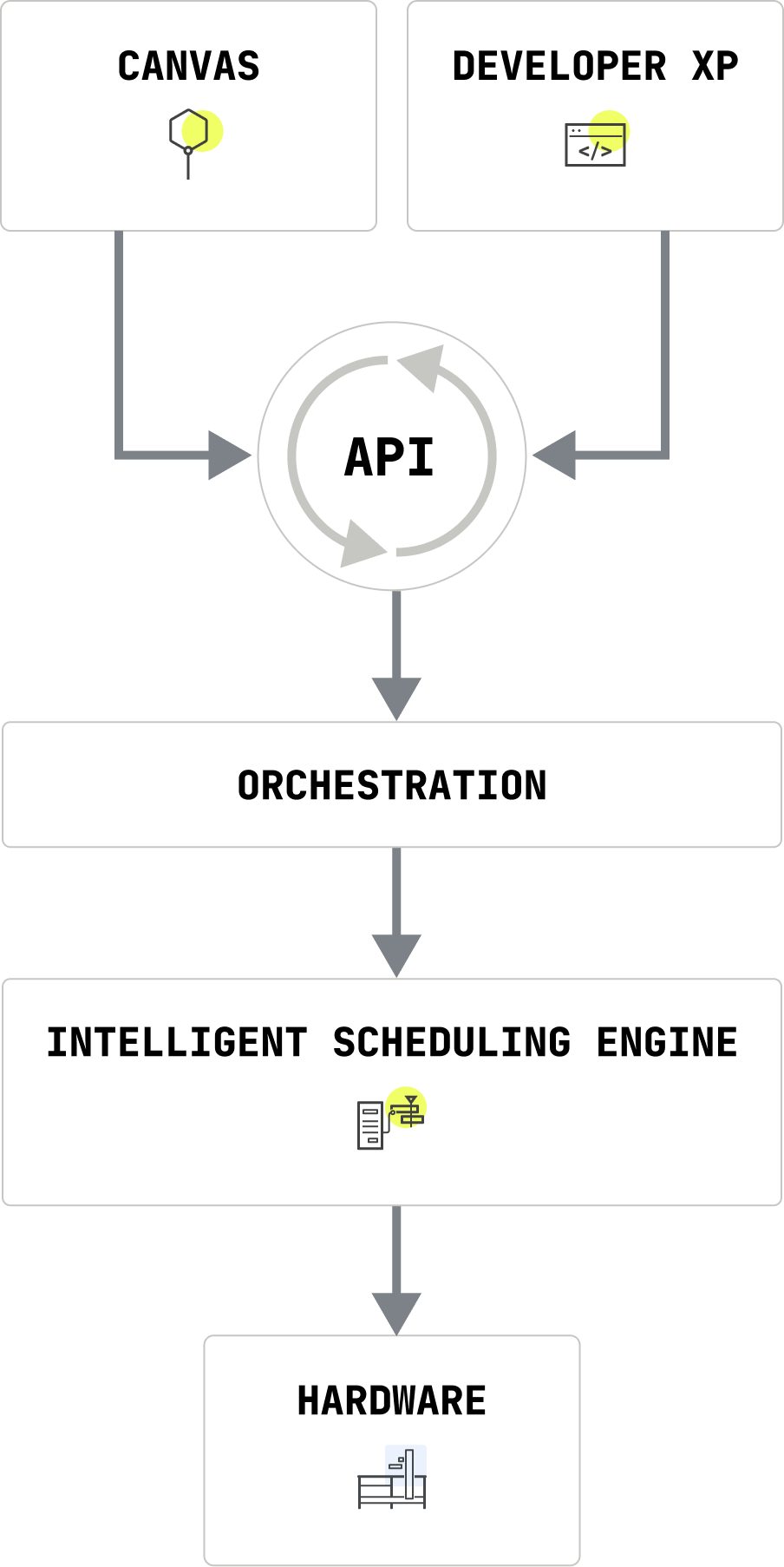
It determines what happens next, when actions should occur, and how resources are allocated. This enables data-driven decisions to influence execution while maintaining visibility and control. Decoupled hardware allows workflows to evolve without redesigning the physical system, while governance frameworks ensure that change remains controlled, traceable, and compliant.
Automation is no longer defined by how efficiently it executes a workflow, but by how effectively it evolves alongside the science it supports. The shift is subtle, but significant.
The Automata & CellVoyant Partnership
The principles of infrastructure-first automation are already being applied in complex, real-world environments where adaptability is essential.
A clear example is the collaboration between Automata and CellVoyant.
Cell culture in advanced therapeutic development presents a challenging environment for automation due to biological systems being inherently variable and requiring experimental conditions to be adjusted in response to subtle changes in cell behaviour. In this context, traditional workflows relying on manual intervention, periodic sampling, and iterative refinement quickly reaches its limits.
The integrated system developed through the Automata × CellVoyant partnership demonstrates how autonomous-ready infrastructure can operate in practice. CellVoyant’s AI models continuously analyse live cell data to predict optimal conditions and influence how experiments are executed.
Automation becomes part of the feedback loop.
The centralised orchestration layer enables dynamic updates to workflow parameters, adjusting timing, conditions, and execution steps to support closed-loop experimentation beyond the limits of tightly coupled systems.
Automata’s LINQ platform provides a reconfigurable foundation by decoupling orchestration from execution, and leveraging modular hardware so workflows can evolve without redesign.
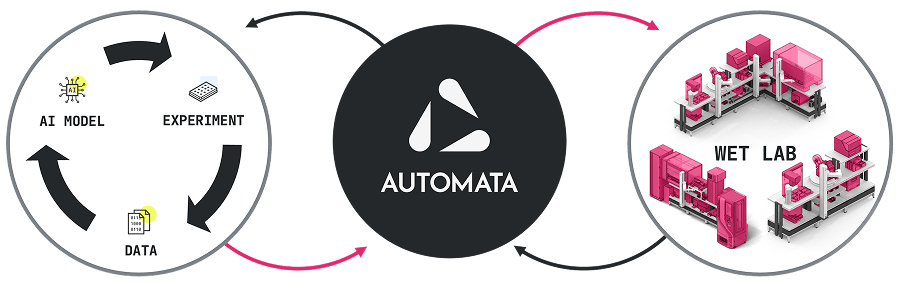
The result is an automation environment that operates continuously, adapts to changing conditions, and generates data that feeds directly into model improvement, enabling:
- Reduced reliance on manual intervention
- Faster decision cycles
- Improved reproducibility through controlled execution
- Scalable data generation to support ongoing model development
Automation evolves from executing a predefined workflow to participating in the experimental process.
Utilising Lab Infrastructure as the Competitive Advantage
For many years, success has been measured by the ability to automate individual workflows to improve throughput, consistency, and efficiency. Today, they are no longer differentiators, but baseline requirements.
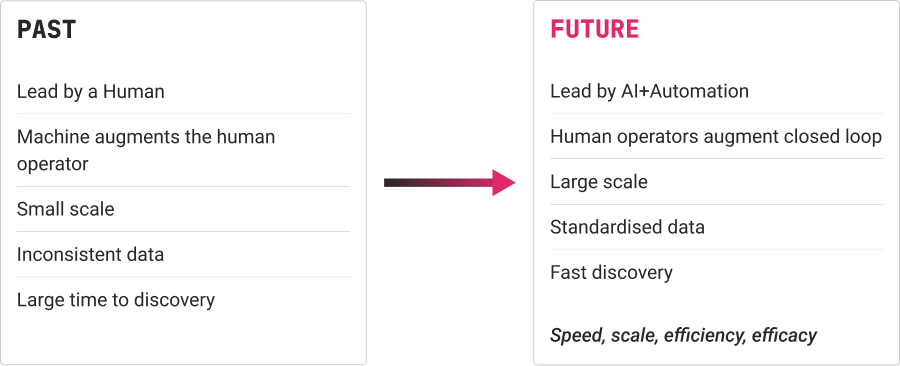
As laboratory automation continues to evolve, the basis of competitive advantage is shifting. The question is no longer whether automation can be implemented, but whether it can adapt.
Research environments are becoming more dynamic. New modalities are emerging, AI is influencing experimental design and execution, and regulatory expectations continue to evolve. In this context, systems built for a single purpose struggle to remain relevant.
Laboratories that invest in connected, reconfigurable automation platforms are evolving workflows without rebuilding systems. They introduce new technologies, scale across teams and sites, and integrate data more effectively. As a result, iteration cycles shorten, data becomes more accessible and consistent, and new programmes can be onboarded more efficiently, while risk is reduced through controlled, traceable change. These advantages compound over time.
By contrast, organisations dependent on point solutions repeat the same cycle: new requirements lead to new systems, increasing complexity and fragmenting progress. The cost of change grows with each iteration. The difference is not always immediate, but over time it becomes significant.
As autonomy becomes more achievable, the ability to support dynamic, data-driven workflows will define how quickly laboratories can innovate and scale. Systems that cannot evolve will be replaced, whereas systems built as infrastructure will continue to grow in value.
This is where the distinction becomes strategic.
Automation is no longer just a tool for execution. It is an architectural decision that shapes how an organisation operates, scales, and competes. Infrastructure-first approaches enable laboratories to respond to change with confidence, integrate emerging technologies effectively, and move toward autonomous operation without repeated reinvention.
At Automata, this perspective underpins the design of automation systems, enabling laboratories to build infrastructure that evolves alongside their science. If you’re exploring how to move beyond point solutions and build automation that scales with your science, we’d welcome the opportunity to continue the conversation.


FAQ
Point-solution automation focuses on optimising individual workflows, often delivering fast results for specific use cases. Lab infrastructure, by contrast, provides a connected and reusable foundation that supports multiple workflows over time. It enables laboratories to scale, adapt, and integrate new technologies without rebuilding systems for each new project.
As laboratories grow, point solutions often lead to fragmented systems, duplicated workflows, and increasing integration complexity. Each new project introduces additional tools and dependencies, making it harder to standardise processes, unify data, and evolve workflows efficiently. Over time, this creates technical debt and slows innovation.
Infrastructure-first automation refers to designing systems where orchestration, execution, and data are managed through a central architecture. This typically involves modular hardware, software-defined orchestration, and consistent data handling. The result is an automation platform that can support multiple workflows and evolve as scientific priorities change.
Autonomous operation relies on systems that can adapt dynamically to data, adjust experimental parameters, and support closed-loop workflows. Infrastructure enables this by separating control logic from hardware, allowing workflows to evolve without rebuilding systems, while maintaining governance, traceability, and system-wide coordination.
AI-driven experimentation depends on continuous learning, where models adjust parameters based on incoming data. This requires automation systems that can adapt in real time. Reconfigurable infrastructure allows workflows to change dynamically, enabling true closed-loop experimentation without system redesign.
Infrastructure standardises how workflows are orchestrated and executed, allowing laboratories to deploy automation consistently across multiple teams or locations. This reduces the need for bespoke integrations, improves data consistency, and enables organisations to scale operations more efficiently.
Labs should evaluate how their automation systems handle change, integration, and governance. Key considerations include whether workflows can be reconfigured without redesign, how data is managed across systems, and whether the architecture supports long-term scalability rather than single-use optimization.